Documentaries
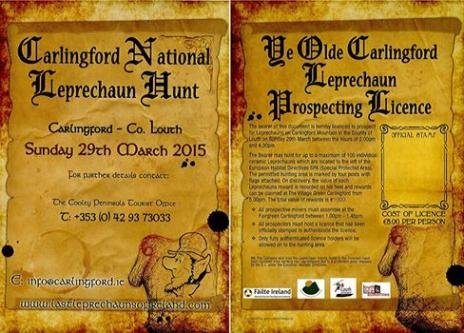
From the Dundalk FM archive Looking Back: Almost 2,000 Leprechaun Hunters Descended on Carlingford in 2015 A forgotten Dundalk FM interview recalls the weekend when pipers, prospecting licences and crowds of treasure seekers transformed Carlingford and the slopes of Slieve Foy. Original Dundalk FM preview published 25 March 2015 • Hunt held Sunday, 29 March 2015 In March 2015, Dundalk FM reported an unusual development in north Louth: multicoloured leprechauns had apparently been sighted arriving in Carlingford. The explanation was almost as colourful as the sighting. The medieval village was preparing for its annual National Leprechaun Hunt, a family event that brought folklore, tourism and a touch of theatrical mischief to the slopes of Slieve Foy. Dundalk FM published its preview on 25 March 2015, featuring Frances Taylor speaking to presenter Caoimhe O’Malley. Four days later, on Sunday, 29 March, an estimated 1,900 people descended on Carlingford for the hunt. Licensed to hunt: prospective treasure seekers could purchase a novelty “Ye Olde Carlingford Leprechaun Prospecting Licence”. Designed like an aged parchment and priced at €8 per person, the licence included rules for the hunt and space for an official stamp. Tickets and information were available through the Cooley Peninsula Tourist Office. Visitors assembled in the village before being led towards the mountain by a band of pipers. Once the hunt began, participants searched through the heather, around rocks and behind bushes for miniature leprechaun figures. Each figure was connected to a cash prize. Students from Champlain College’s Dublin programme were among the international visitors who joined the search. Two members of that group, Adam Vernali and Karisa Desjardins, found prize-carrying leprechauns and returned from the mountain with some extra euros—if not the legendary pot of gold. Carlingford’s “Leprechaun Whisperer” The modern event grew from folklore promoted by Carlingford native Kevin Woods, who became widely known as Ireland’s “Leprechaun Whisperer”. The Carlingford story began after local publican P.J. O’Hare reportedly found a miniature green suit, small bones and four gold coins on Slieve Foy. Woods recognised that the discovery could be developed into a story and visitor attraction for the medieval village. Woods later recalled that one of the early hunts involved hiding £1,000 beneath four ceramic leprechauns and selling hunting licences for £10. What began as a playful tourism idea developed into a nationally known event attracting visitors from Ireland and overseas. According to the legend promoted around the attraction, Ireland’s remaining leprechauns live in caverns and tunnels beneath the Cooley Mountains. Later versions generally placed their number at 236, with an elder named Carraig communicating with Woods. The story was presented in a spirit of folklore, imagination and fun. A new cavern for 2015 The hunt was not the only leprechaun-related development in Carlingford that year. In January 2015, Louth County Council granted planning permission for Woods’ underground Leprechaun and Fairy Cavern on Ghan Road. The council described it as a unique visitor facility with the potential to attract national and international tourists to County Louth. By the time of the March hunt, the cavern had become another part of Carlingford’s growing association with leprechaun folklore. The event complemented the village’s traditional attractions: its medieval streets, castle, abbey, harbour and dramatic location between Slieve Foy and Carlingford Lough. The leprechaun story added a playful layer to that historical and natural appeal. Whatever one believed about the “little people”, the tourism impact was real. The event brought approximately 1,900 people into a relatively small village in one day and generated attention for Carlingford in Irish and international media. The missing Dundalk FM recording Dundalk FM’s surviving archive entry identifies the interview as “Frances Taylor speaks to Caoimhe O’Malley about the National Leprechaun Hunt in Carlingford”. The original audio was stored on an older Dundalk FM website that is no longer online, and the migrated MP3 address presently returns a “not found” error. No exact public copy has been located on YouTube, Mixcloud or SoundCloud. Related footage survives, however, including a 2016 Carlingford Leprechaun Hunt promotion and earlier footage associated with the hunt. Sources and further viewing Dundalk FM podcast archive — surviving listing for the Frances Taylor and Caoimhe O’Malley interview, published 25 March 2015. Champlain College: “Champlain Joins the Hunt for Leprechauns!” — eyewitness report and photographs from the 2015 event. Irish Independent: “Ireland’s boom towns” — contemporary report recording attendance of approximately 1,900. The Irish Times: profile of Kevin Woods — background to the folklore, early hunts and prospecting licences. The Irish Times: “Leprechauns’ cave granted planning permission” — January 2015 report on the Ghan Road attraction. Irish Independent: “10 great reasons to visit Louth” — contemporary preview confirming the 29 March 2015 hunt. YouTube: 2016 Carlingford Leprechaun Hunt promotion. YouTube: earlier Carlingford Leprechaun Hunt footage. Historical feature compiled from Dundalk FM’s archive and contemporary reports.

A memorable night on Sports Academy From Belarus to Oriel: When Dundalk Dared to Dream Against BATE Borisov Gavin McLaughlin and Dundalk FC general manager Martin Connolly joined John Murphy on Sports Academy as the Lilywhites prepared for a defining Champions League night. Sports Academy • 20 July 2015 • UEFA Champions League second qualifying round In July 2015, Dundalk FC stood one goal away from eliminating one of the most experienced clubs in Champions League qualifying. Belarusian champions BATE Borisov had beaten Stephen Kenny’s side 2–1 in the first leg at the modern Borisov Arena on 15 July. Dundalk returned home defeated, but far from discouraged. David McMillan’s away goal meant that a 1–0 victory at Oriel Park would send the League of Ireland champions into the next round. BATE BorisovBorisov Arena 2–1 Dundalk FC15 July 2015 Five days after the first leg, Dundalk Democrat sports journalist Gavin McLaughlin joined John Murphy on Dundalk FM’s Sports Academy. McLaughlin described the Borisov Arena, the atmosphere surrounding the European fixture and the conversations and opinions shared by Dundalk’s travelling support. The first leg had started badly for the visitors when Aleksandr Karnitski put BATE ahead. Dundalk responded impressively. A move involving Daryl Horgan and Richie Towell created the opening for McMillan, who calmly finished from the edge of the penalty area and sent the travelling support into celebration. BATE restored its lead before half-time, but Dundalk prevented the hosts from adding to their advantage after the interval. Against a club accustomed to European group-stage football, the Irish champions remained composed, technically assured and very much alive in the tie. What was at stake? Contemporary reports estimated that progression would guarantee Dundalk approximately €1.2 million in prize money. More immediately, a single unanswered goal at Oriel Park would be enough to eliminate BATE on the away-goals rule then used by UEFA. Martin Connolly’s message to supporters During the second half of the programme, Dundalk FC general manager Martin Connolly joined the conversation with important advice for everyone heading to Oriel Park on Wednesday, 22 July. With a capacity crowd expected and European match-night arrangements in place, supporters were encouraged to plan ahead and help create the kind of atmosphere that could lift the Lilywhites. The anticipation was felt all over the town. Tickets were precious, conversation was dominated by possible line-ups and scorelines, and one question hung over Oriel: could Dundalk finish the job against a team accustomed to playing on Europe’s biggest stages? Excitement around the return leg was enormous. Dundalk were reigning League of Ireland champions and had shown in Belarus that they could compete with a club of BATE’s European experience. Stephen Kenny described his players as prepared and ready to attack the tie, while acknowledging that the visitors would arrive conscious of the threat Dundalk posed. A brave European campaign ends narrowly A crowd of just over 3,100 packed into Oriel Park on 22 July. Dundalk kept BATE scoreless but could not find the goal required to overturn the first-leg deficit. The match finished 0–0, sending the Belarusian champions through 2–1 on aggregate. Dundalk FC Oriel Park 0–0 BATE Borisov BATE won 2–1 on aggregate Although the result ended Dundalk’s European campaign, the two performances strengthened the belief that Kenny’s team belonged at that level. BATE went on to reach the Champions League group stage, while Dundalk completed 2015 by retaining the League of Ireland title and winning the FAI Cup. The story also gained a remarkable sequel. Drawn against BATE again in 2016, Dundalk overturned another first-leg deficit with a famous 3–0 victory at Tallaght Stadium. Two goals from David McMillan and a late Robbie Benson strike delivered a 3–1 aggregate win and one of the greatest European results achieved by an Irish club. That later triumph gave additional meaning to the discussion heard on Sports Academy in July 2015. The confidence of the travelling supporters, the belief created by McMillan’s away goal and the expectation surrounding the return to Oriel were early signs of the extraordinary European journey still to come. Sources and further reading Dundalk FM 97.7 — current official station website and Sports Academy listing. League of Ireland: Dundalk’s top European moments — account of David McMillan’s 2015 goal in Borisov and the 2016 victory. The Irish Times: David McMillan goal gives Dundalk confidence — report from the first leg. Irish Independent: Gritty Dundalk keep dream alive — contemporary account from Belarus and the financial importance of progression. The Irish Times: Stephen Kenny previews the return leg. The42: Goalless draw ends Dundalk’s European campaign — report from Oriel Park. Extratime: Dundalk 0–0 BATE Borisov — second-leg match report. Sky Sports: Dundalk v BATE match information and teams. The42: Dundalk warning over counterfeit Champions League tickets. RTÉ Sport: Dundalk’s famous 2016 victory over BATE — the sequel to the 2015 tie. A Dundalk FM look back at a European tie that helped shape an unforgettable era for the Lilywhites.
One small turn of the dial Remember Retuning Your Radio? How 97.7 Became the Sound of Dundalk A postcard through the letterbox. A new number on the dial. And a community helping its own radio station reach farther than before. 20 October 2015 • Dundalk FM If you lived around Dundalk in October 2015, you may remember being asked to do something very simple. Turn on the radio. Move the dial to 97.7 FM. Then tell Dundalk FM what you could hear. It did not sound like a grand moment in broadcasting history. There was no red carpet and no dramatic countdown. But that small request marked the beginning of a change that would become part of Dundalk life. After years on 100 FM, the station was moving. 100 FMThe original frequency ➔ 97.7 FMThe new home on the dial But would anyone hear it? A new frequency only matters if the voices reach the people waiting on the other side. So Dundalk FM asked listeners to become part of the test. People tuned in from their kitchens, cars, shops, and workplaces, then reported back on the strength of the new signal. The first reports were promising. Reception appeared stronger in Knockbridge, Castlebellingham, and Ravensdale. A signal shaped by its listeners Every response helped reveal how the new frequency was travelling across Dundalk and North Louth. The audience was helping to build the next chapter as it happened. That is what made the moment special. The people listening were not treated as numbers on an audience chart. They were participants. That same idea still sits at the heart of Dundalk FM as a community station. Local people do not simply listen. They contribute, present, share stories, support programmes, and help the station reflect the place it serves. Do you remember where you were when you first retuned to 97.7? The postcard that announced a new era There were no social media algorithms to trust with such an important message. Dundalk FM went directly to local homes. A postcard through the letterbox reminded listeners that the final day on 100 FM would be Saturday, 31 October 2015. When Sunday morning arrived, the station would have a new home at 97.7 FM. 20 October 2015The frequency change was announced 31 October 2015The final day on 100 FM 1 November 201597.7 became the station’s new home For listeners, the task took seconds. Turn the dial, find the signal, and save the new preset. For the station, it was much bigger. The frequency changed, but the promise did not. Dundalk FM would continue to make radio about local people, local concerns, local culture, and the stories that national broadcasters could never know in quite the same way. Three numbers that became part of the name Today, 97.7 feels inseparable from Dundalk FM. It appears beside the logo. Presenters say it on air. Listeners know exactly where to find it. What began as a technical change became part of the station’s identity. More than a decade later, you can still tune to 97.7 FM across Dundalk and the surrounding area. You can also listen live to Dundalk FM online, wherever in the world you happen to be. Yet the real connection has never depended on distance. It comes from hearing a familiar place reflected through familiar voices. One small turn of the dial began a story that continues today. 97.7 has been the home of Dundalk FM ever since. Were you listening when Dundalk FM changed frequency? Share where you heard the new signal and what the station has meant to you over the years. Your memory is part of this story too. Dundalk FM 97.7, the sound of the local community since 2004.
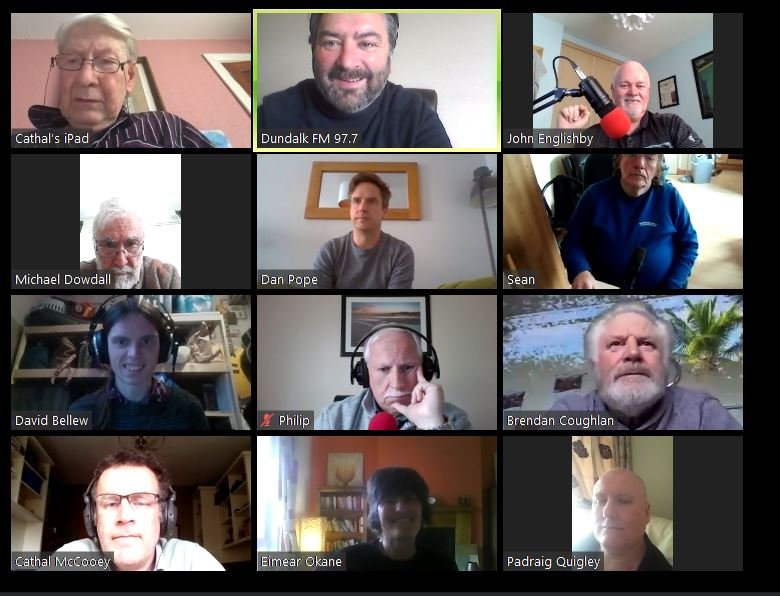
Dundalk FM in lockdown! Remote but Never Distant: How Dundalk FM Kept Broadcasting The studio fell quiet in spring 2020. Across Dundalk, spare bedrooms, kitchen tables, laptops, and mobile phones became the beginnings of a new kind of radio station. April to May 2020 • Dundalk FM 97.7 The microphones were still there. The sound desk was ready. The studio lights could still glow red. But the presenters could not gather around them. When the first Covid lockdown separated Dundalk FM’s volunteers from the station and from one another, local radio suddenly faced a difficult question. How do you keep a community connected when the people making the programmes cannot share a studio? The answer began with a weekly call On 23 April 2020, a group of presenters met remotely for the first in a series of broadcasting question and answer sessions. Some were experienced editors. Others were taking their first steps with home recording. Everybody had something to learn, and almost everybody had something useful to share. 23 AprilSession one 30 AprilSession two 7 MaySession three 14 MaySession four Over four Thursdays, names and faces appeared on screen: John Englishby, Dan Pope, Eimear O’Kane, Brendan Coughlan, Cathal Cassidy, Alan Byrne, Cathal McCooey, Mary Rose Muckian, Philip O’Brien, Sean Callaghan, Padraig Quigley, David Bellew, Marian Del Duca, Pat Byrne, Tracey Hanby, and others from across the station. The calls were practical, but they were also social. Presenters who had never met properly before said hello. People compared equipment, solved problems, demonstrated editing techniques, and encouraged colleagues who were nervous about recording alone. There was a wonderful sense of “we’re in this together.” The studio had become a collection of homes, but the team was still a team. Presenters met online to exchange ideas, solve recording problems, and keep programmes moving during lockdown. Could a kitchen table become a radio studio? It turned out that the first step did not require a room full of expensive equipment. A smartphone could record a presenter’s links. A plug in microphone or gaming headset could make a conversation sound clearer. Soft furnishings could reduce echo. A laptop could bring interviews together through Zoom, while editing software allowed voices, music, introductions, and station sounds to become a finished programme. A quiet roomCurtains, carpets, and soft furniture help calm unwanted echo. A clear microphoneA simple headset or USB microphone can transform how close a voice feels. A willingness to learnThe most important part of the home studio was the person willing to press record. Padraig Quigley shared advice on equipment and improving a laptop. Philip O’Brien explained how he built a promo for AlphaBeats by combining music, voice, and station audio. John Englishby demonstrated an edit for a Joe Jackson Spotlight programme and offered to help Mary Rose Muckian develop her own editing skills. The programmes kept taking shape This was not training for some distant future. Every new skill could help put another local programme on air. Ideas developed during the sessions included: new editions of Spotlight and AlphaBeats, the continuing 100 Years of Music project, a Slane concert series, a remote version of Ready, Steady, Go, a programme linking songs through five degrees of separation, and a new Community Call series. For 100 Years of Music, presenters divided the decades between them. One person could research and write. Another could record. Someone else could edit. Files travelled between homes, and individual contributions became complete broadcasts. Shows such as Fadó Fadó, The Brunch, Health and Well Being, and Beaten Tracks explored ways to keep conversations flowing even when the contributors were miles apart. Radio for people who needed company The technical learning served a larger purpose. During lockdown, isolation was not an abstract problem. Older listeners and people living alone could go days without seeing a familiar face. Dundalk FM began developing Community Call as a 24 part series, bringing together researchers, presenters, and editors to share helpful information and strengthen connections. The Community Foundation for Ireland later recorded support for a Dundalk FM radio programme aimed at increasing connectivity among older people in the town. The work reflected the same purpose that continues to define Dundalk FM as a community radio station. Technology mattered, but only because it helped one local voice reach another person who needed to hear it. Learning to listen differently Remote conversations were not always easy. Mary Rose captured one of the central difficulties: speaking into a laptop could feel stilted, with the natural rhythm of conversation harder to find. The group learned that good headphones and a closer microphone could make voices feel more immediate. They also learned to leave space, listen carefully, and accept that an online conversation had its own rhythm. Those lessons went beyond software. They made presenters more patient, more resourceful, and more aware of how much warmth the human voice can carry. A simple invitation brought the station’s presenters together while they could not meet in person. The doors reopened, but the knowledge remained Plans were made for presenters to begin returning to live broadcasting from 8 June 2020 under new safety rules. The station would look different. Numbers were restricted, guests stayed away at first, and every return required care. Yet Dundalk FM did not return as the same station that had entered lockdown. Its volunteers now knew how to record on phones, conduct remote interviews, edit programmes at home, transfer large audio files, and collaborate without sitting in the same room. That knowledge continued to create opportunities. A remote studio established at RehabCare Dundalk during the pandemic later helped participants remain involved in training and broadcasting, an initiative recognised in coverage of volunteer Jason Kelly’s contribution to community radio. The real lesson was never about the equipment A microphone could be inexpensive. A studio could be a spare room. An interview could arrive through a laptop. What made it radio was the willingness to learn, help a colleague, and keep talking to the community. That spirit remains part of Dundalk FM
Engaging migrants through community radio Twenty New Voices: How Dundalk FM Used Radio to Build Belonging The project began with a simple belief. People who are building a new life in Dundalk should have the opportunity to tell their own stories, in their own voices, on their own community station. Dundalk FM • Community radio training and participation When people move to a new country, they are often talked about long before anybody asks to hear from them.Statistics describe them. Headlines debate them. Policies categorise them. But a microphone can change the direction of the conversation. In 2018, Dundalk FM set out to welcome 20 new migrant voices into its community radio service. The goal was not to create a single programme about migration and then move on. It was to give new contributors the skills, confidence, and weekly space to become part of local broadcasting. 20new voices A place within the station Participants would learn how community radio works, develop practical broadcasting skills, and contribute through a weekly reporter slot. Integration becomes real when people are not merely welcomed into the audience, but trusted with the microphone. Learning how to tell a story on air The training began with the foundations of community radio. Participants explored why a community-owned station exists, how a programme is structured, and what responsibilities come with speaking on air. They learned about running orders, programme links, formats, features, health and safety, and the legal importance of avoiding libel. These were not abstract classroom topics. Each lesson prepared participants to make real radio for real listeners. The project aimed to bring 20 new migrant voices into Dundalk FM through training and regular participation. Then came the microphones, faders, and first recordings Knowing the purpose of community radio was only the beginning. The next step was learning how to make it. Control the soundSet microphone and music levels using the studio sound desk. Record a confident linkIntroduce a subject clearly and guide listeners through a programme. Edit audioShape recorded voices and programme elements into a finished piece. Create a promotionGive listeners a reason to discover an upcoming show or feature. Research local informationFind a news item or community notice and prepare it responsibly. Build a magazine programmeBring several voices and subjects together in a 25 minute format. Every exercise moved the participants closer to the same powerful moment: hearing something they had researched, recorded, and created coming back through the speakers. Media literacy is also a form of confidence The project was designed to develop more than technical ability. Participants could share their experiences with the wider community, explain what they had learned to the groups they represented, and better understand how media stories are selected, framed, and presented. That matters because media literacy changes a person’s relationship with information. A participant no longer hears a radio report only as a listener. They understand the research, choices, editing, and responsibility behind it. The deeper skill was agency. Participants were learning how to move from being represented by the media to becoming active contributors within it. New voices make local radio more local Dundalk has been shaped by people who arrived from many countries, carrying languages, music, memories, skills, businesses, family traditions, and new ways of seeing the town. If those experiences are missing from local radio, the station cannot fully reflect the community outside its door. A weekly reporter slot offered something valuable to everyone. New contributors gained access to the airwaves. Listeners heard experiences they might not encounter in their everyday lives. Community groups gained members with practical communication skills. Dundalk FM became more representative of the place it served. From a training room to a wider culture of participation The project sat within a longer history of Dundalk FM training people from migrant and international communities. Later station records describe Dundalk International trainees, free radio courses for migrants and refugee women, and programmes that explored migration experiences through collaboration. A national report on the social benefits of community radio also documented projects designed to challenge xenophobia by creating direct contact with migrant experiences. Training, teamwork, and participant-led interviews helped replace second-hand assumptions with real voices. This approach still matches the current values described in Dundalk FM’s mission as an inclusive community station. The station welcomes participation from established and newer communities, recruits volunteers from across Dundalk, and offers supportive training without requiring previous broadcasting experience. A photograph can show training. A voice can show belonging. The photographs from the first workshop were taken by Lucie Mingmei Hao, then a fourth-year TV and Film student at Dundalk Institute of Technology. They capture people learning, listening, trying equipment, and working alongside one another. But the true result of a radio project cannot be contained in a photograph. It is heard when somebody introduces a community story with confidence. When a listener recognises their own experience on air. When a participant realises that an accent is not something to hide, but part of the voice they bring to Dundalk. Who has not been heard yet? That question remains essential for every community station. Dundalk continues to change, and its radio service must keep making room for the people, languages, cultures, and stories that now form part of local life. If you or your community group has a story to share, explore the Dundalk FM community hub, contact the station about taking part, or listen live to the voices already on air. This article was researched, refreshed and prepared for Dundalk FM by Astory Media, helping local organisations turn valuable archive material into engaging digital content. Dundalk FM 97.7, a community sounds most like itself when everyone has the chance to be heard
Pages