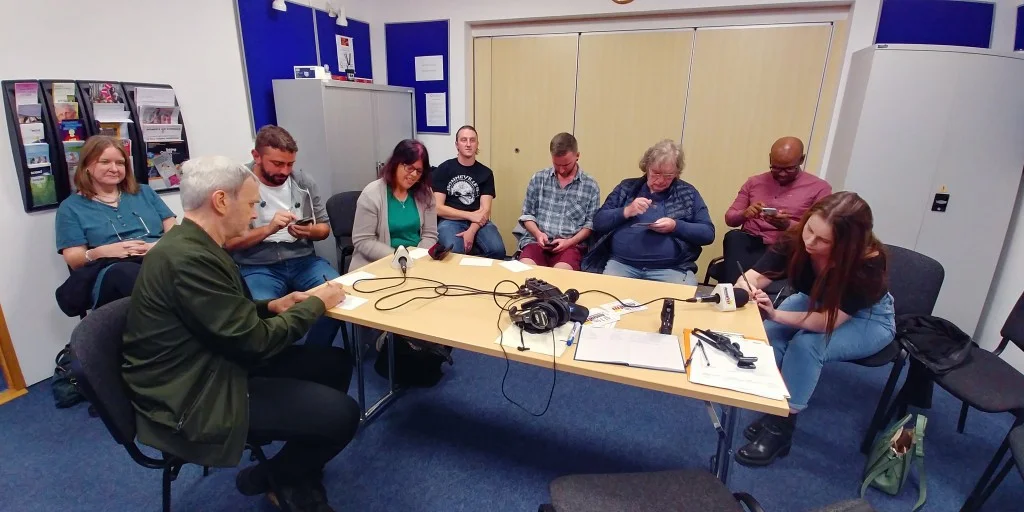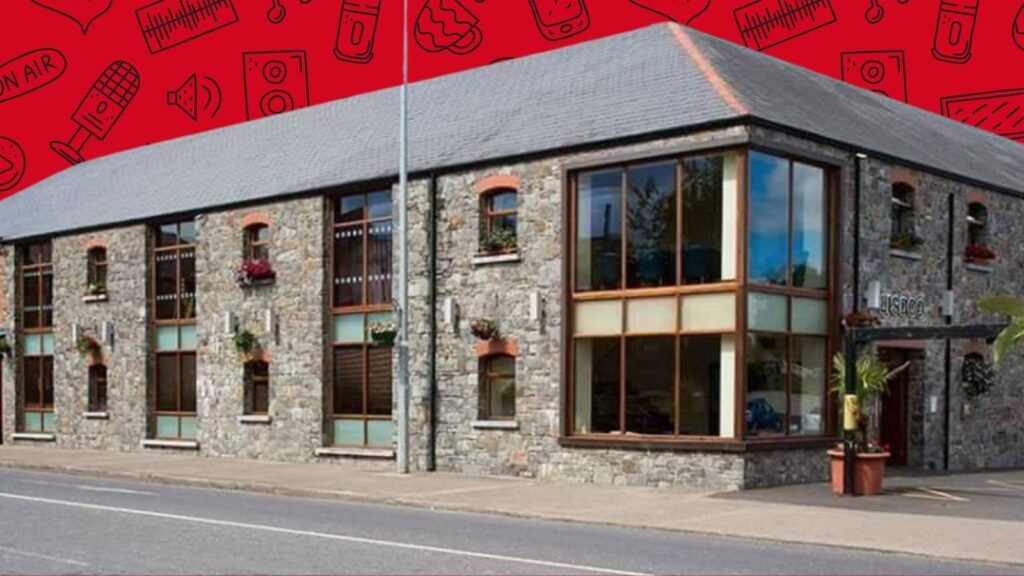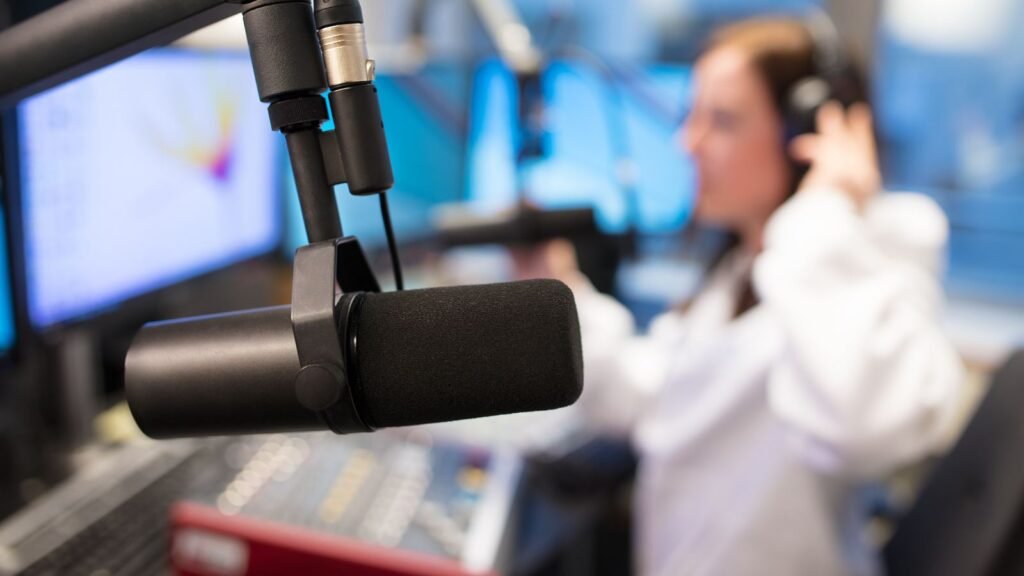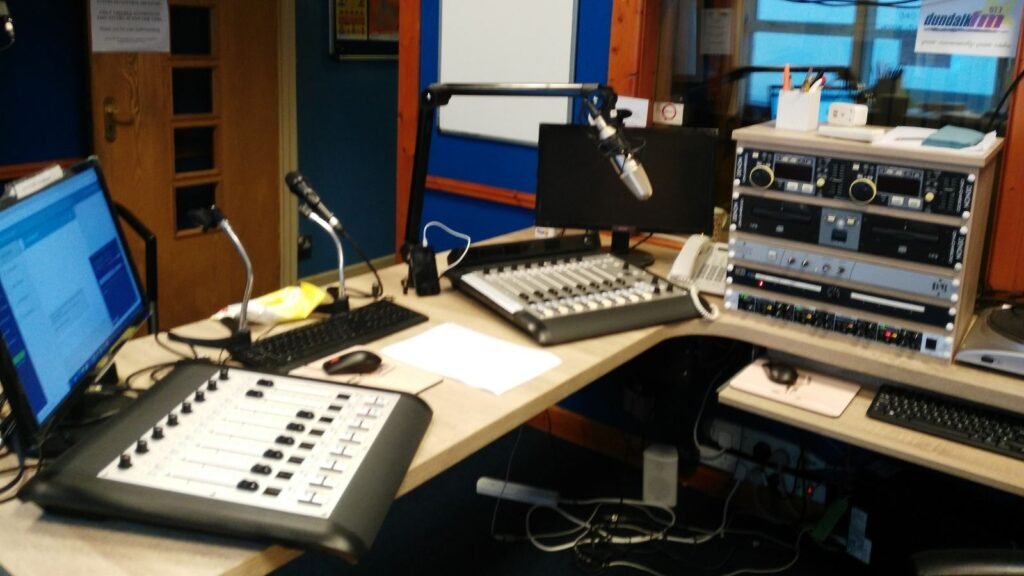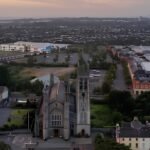
But the presenters could not gather around them.
When the first Covid lockdown separated Dundalk FM’s volunteers from the station and from one another, local radio suddenly faced a difficult question.
How do you keep a community connected when the people making the programmes cannot share a studio?
The answer began with a weekly call
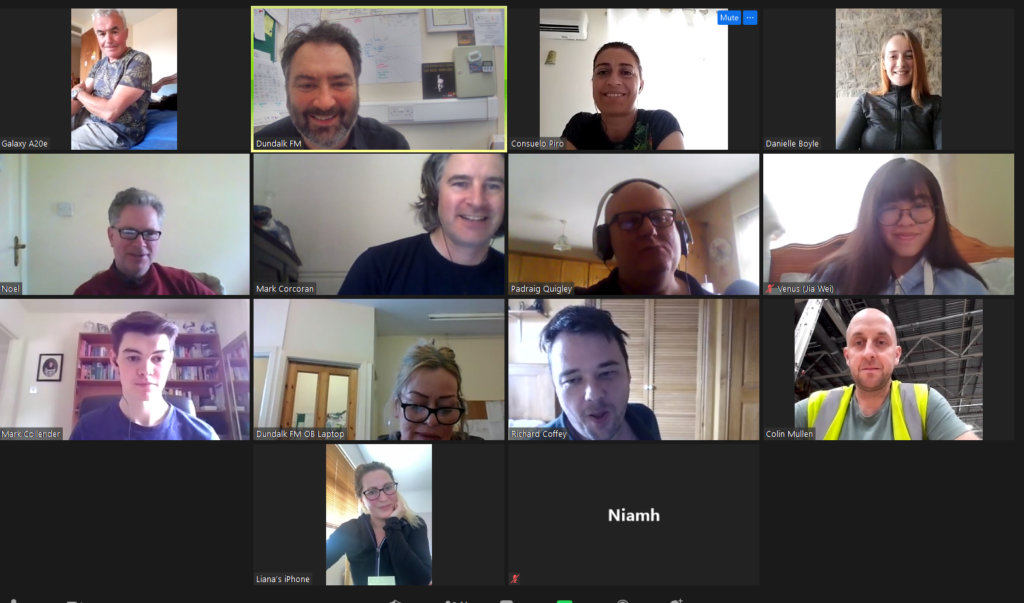
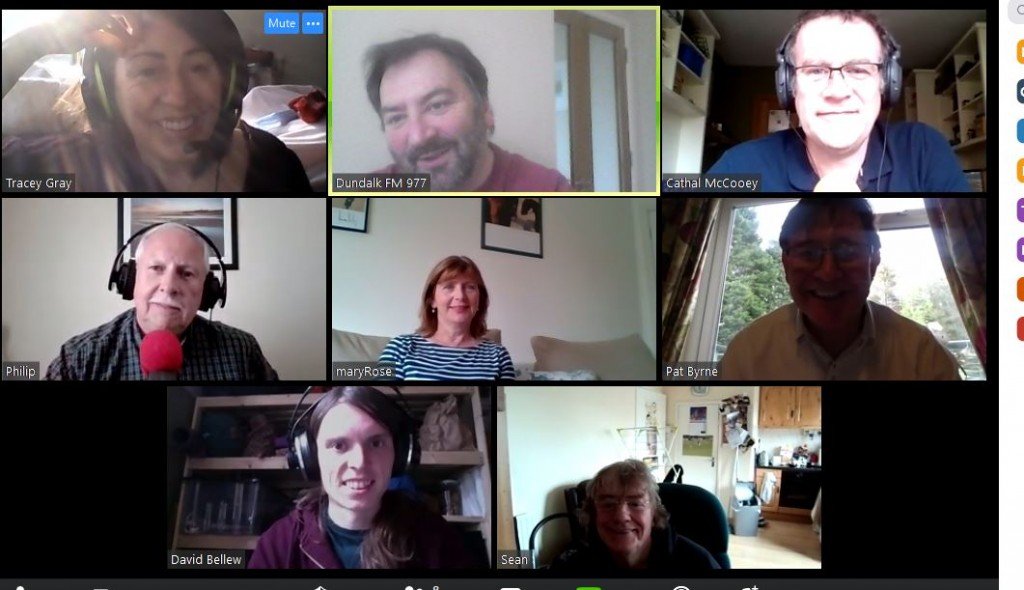
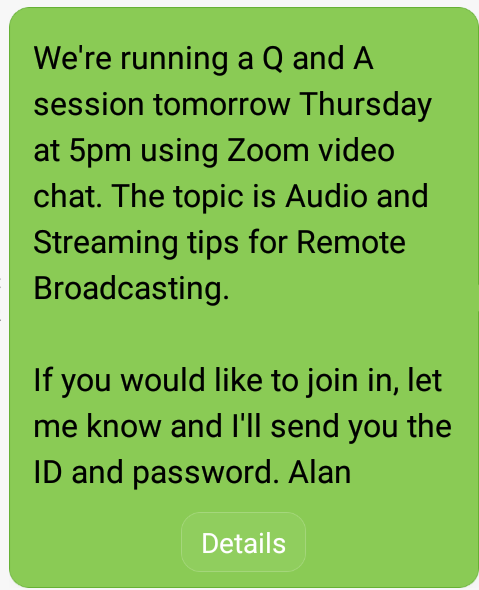
On 23 April 2020, a group of presenters met remotely for the first in a series of broadcasting question and answer sessions. Some were experienced editors. Others were taking their first steps with home recording. Everybody had something to learn, and almost everybody had something useful to share.
Over four Thursdays, names and faces appeared on screen: John Englishby, Dan Pope, Eimear O’Kane, Brendan Coughlan, Cathal Cassidy, Alan Byrne, Cathal McCooey, Mary Rose Muckian, Philip O’Brien, Sean Callaghan, Padraig Quigley, David Bellew, Marian Del Duca, Pat Byrne, Tracey Hanby, and others from across the station.
The calls were practical, but they were also social. Presenters who had never met properly before said hello. People compared equipment, solved problems, demonstrated editing techniques, and encouraged colleagues who were nervous about recording alone.
There was a wonderful sense of “we’re in this together.” The studio had become a collection of homes, but the team was still a team.
Could a kitchen table become a radio studio?
It turned out that the first step did not require a room full of expensive equipment.
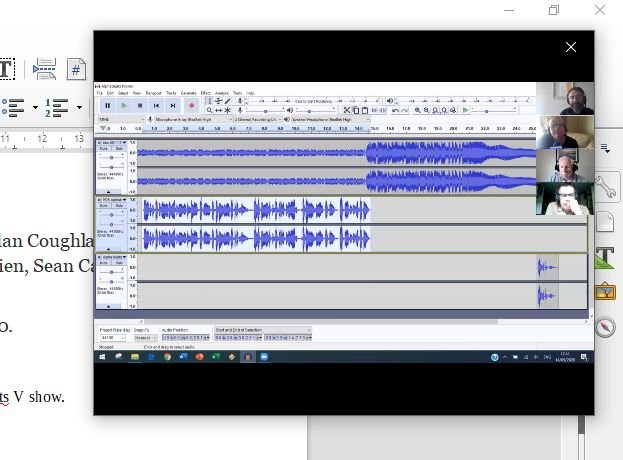
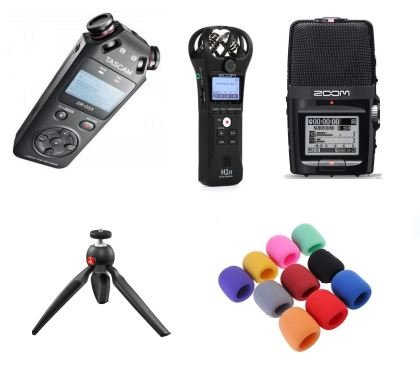
A smartphone could record a presenter’s links. A plug in microphone or gaming headset could make a conversation sound clearer. Soft furnishings could reduce echo. A laptop could bring interviews together through Zoom, while editing software allowed voices, music, introductions, and station sounds to become a finished programme.
Padraig Quigley shared advice on equipment and improving a laptop. Philip O’Brien explained how he built a promo for AlphaBeats by combining music, voice, and station audio. John Englishby demonstrated an edit for a Joe Jackson Spotlight programme and offered to help Mary Rose Muckian develop her own editing skills.
The programmes kept taking shape
This was not training for some distant future. Every new skill could help put another local programme on air.
new editions of Spotlight and AlphaBeats, the continuing 100 Years of Music project, a Slane concert series, a remote version of Ready, Steady, Go, a programme linking songs through five degrees of separation, and a new Community Call series.
For 100 Years of Music, presenters divided the decades between them. One person could research and write. Another could record. Someone else could edit. Files travelled between homes, and individual contributions became complete broadcasts.
Shows such as Fadó Fadó, The Brunch, Health and Well Being, and Beaten Tracks explored ways to keep conversations flowing even when the contributors were miles apart.
Radio for people who needed company
The technical learning served a larger purpose. During lockdown, isolation was not an abstract problem. Older listeners and people living alone could go days without seeing a familiar face.
Dundalk FM began developing Community Call as a 24 part series, bringing together researchers, presenters, and editors to share helpful information and strengthen connections. The Community Foundation for Ireland later recorded support for a Dundalk FM radio programme aimed at increasing connectivity among older people in the town.
The work reflected the same purpose that continues to define Dundalk FM as a community radio station. Technology mattered, but only because it helped one local voice reach another person who needed to hear it.
Learning to listen differently
Remote conversations were not always easy. Mary Rose captured one of the central difficulties: speaking into a laptop could feel stilted, with the natural rhythm of conversation harder to find.
The group learned that good headphones and a closer microphone could make voices feel more immediate. They also learned to leave space, listen carefully, and accept that an online conversation had its own rhythm.
Those lessons went beyond software. They made presenters more patient, more resourceful, and more aware of how much warmth the human voice can carry.
The doors reopened, but the knowledge remained
Plans were made for presenters to begin returning to live broadcasting from 8 June 2020 under new safety rules. The station would look different. Numbers were restricted, guests stayed away at first, and every return required care.
Yet Dundalk FM did not return as the same station that had entered lockdown. Its volunteers now knew how to record on phones, conduct remote interviews, edit programmes at home, transfer large audio files, and collaborate without sitting in the same room.
That knowledge continued to create opportunities. A remote studio established at RehabCare Dundalk during the pandemic later helped participants remain involved in training and broadcasting, an initiative recognised in coverage of volunteer Jason Kelly’s contribution to community radio.
The real lesson was never about the equipment
A microphone could be inexpensive. A studio could be a spare room. An interview could arrive through a laptop. What made it radio was the willingness to learn, help a colleague, and keep talking to the community.
That spirit remains part of Dundalk FM 97.7 today. You can also explore the station’s broadcasting tutorials and videos on YouTube.