Meet the new voices
They did not arrive with years of professional broadcasting experience. That was not the point.
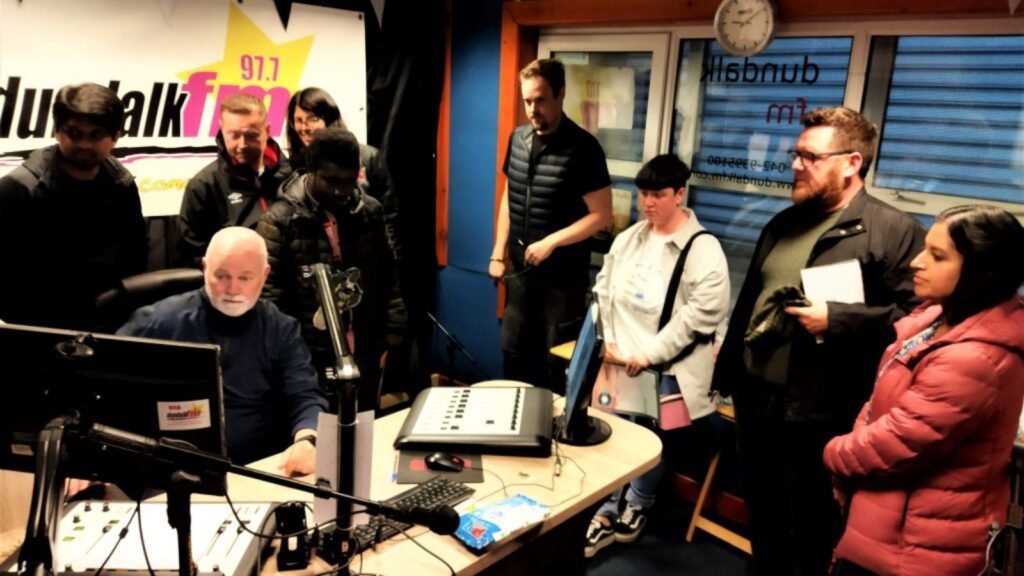
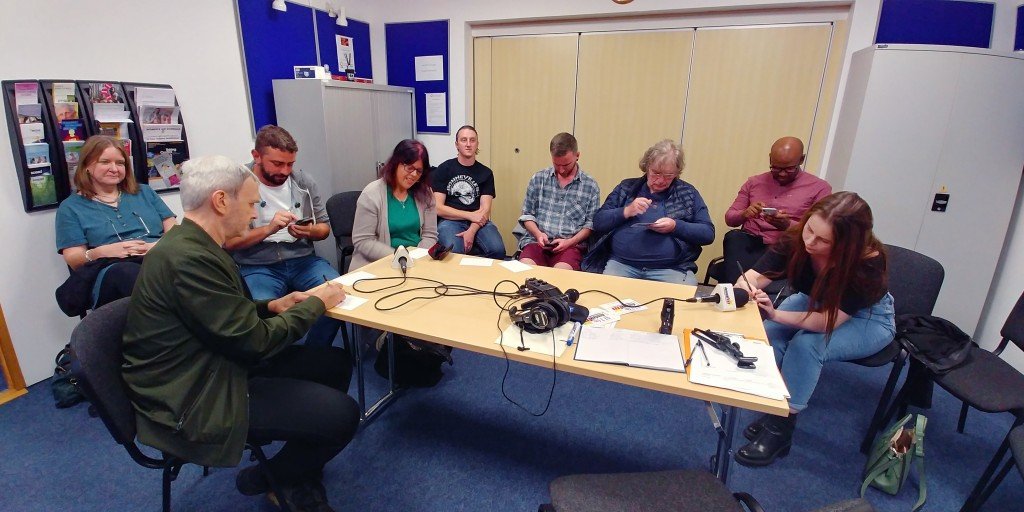
The information night was designed to let people experience the creative process quickly. Instead of spending hours talking about what radio might feel like, the volunteers began making it.
The fastest way to stop imagining yourself on radio is to hear your own first link coming back through the speakers.
It begins with choosing a song
A programme called 5 Irish Tunes offers a perfect starting point. Music gives a new presenter something familiar to hold onto, but every choice also creates a story.
Why this artist? Why this recording? What should a listener know before the first note? Is there a connection to a place, a memory, a musical tradition, or a moment in Irish culture?
Answering those questions turns a song choice into radio.
Experience passed from presenter to presenter
Seoirse McCann and Sean Callaghan joined the group to talk about their own experience of presenting on Dundalk FM. Their presence mattered because the volunteers could ask questions of people who had already crossed the same invisible line from listener to broadcaster.
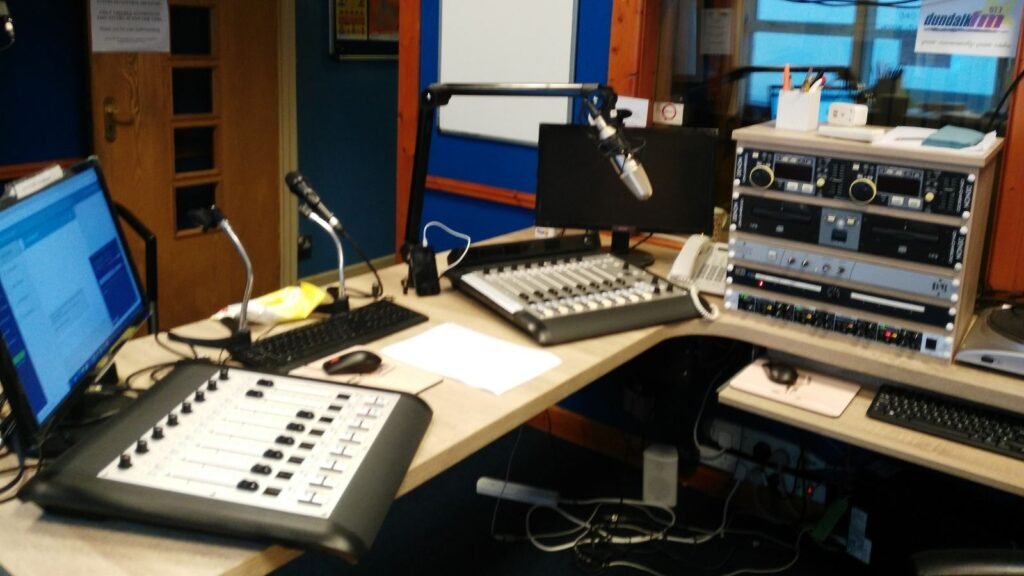
They encouraged the group to continue into the station’s September radio course, where participants would learn how to plan programmes, write running orders, record and edit interviews, use audio software, and operate the studio sound desk.
The message was reassuring: nobody begins by knowing everything. Community radio grows because people who have learned are willing to help the next person learn too.
The running order turned separate ideas into one show
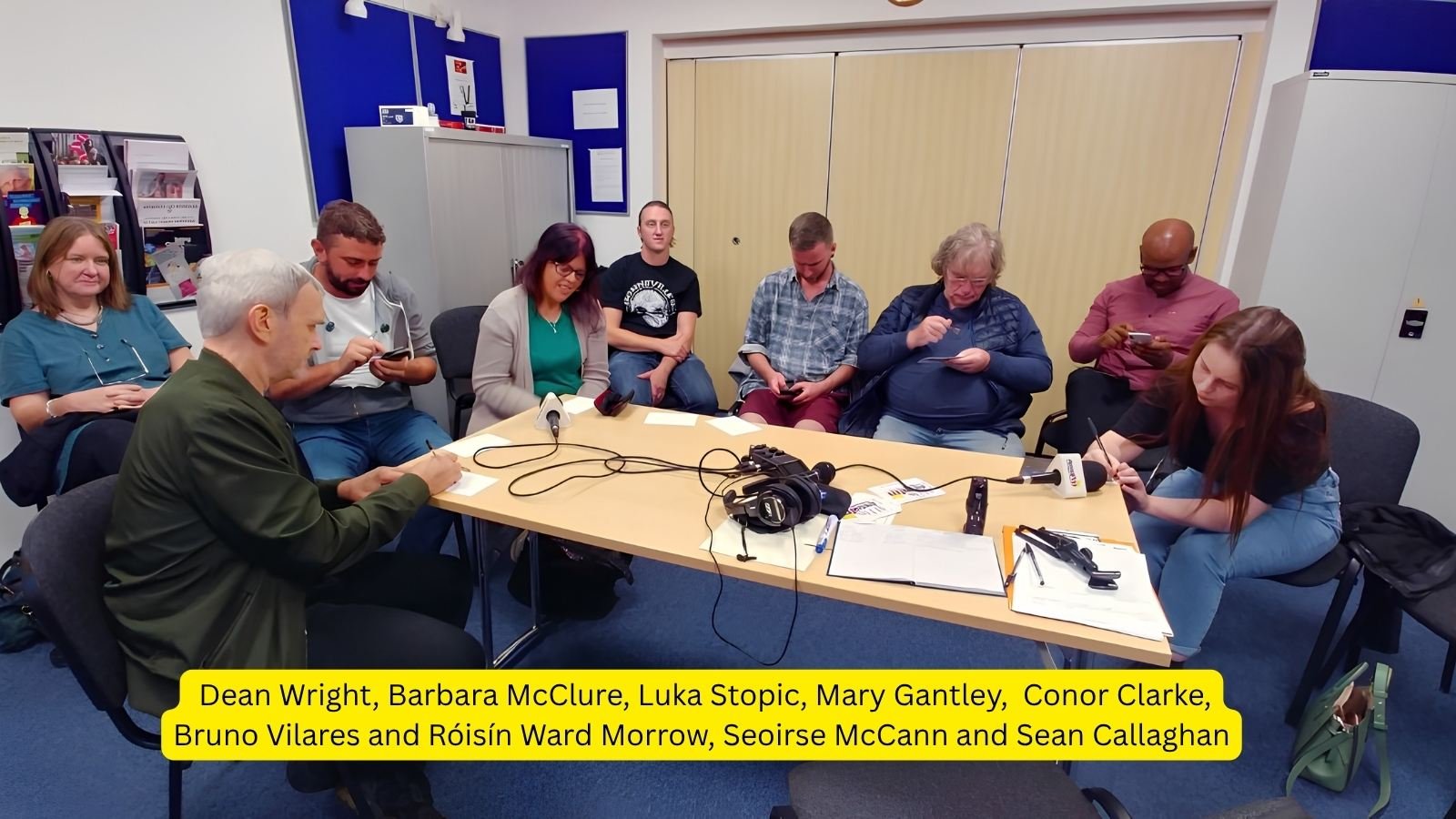
A running order is the map of a radio programme. It shows when each voice appears, where every song begins, and how the individual pieces fit together.
For a first-time presenter, seeing the programme written down makes the task feel possible. You do not have to fill an hour all at once. You only need to deliver the next prepared link.
The volunteers recorded their contributions on Thursday evening. Alan Byrne edited the material the following day, bringing the separate voices and music together as one coherent programme.
Then came the moment that made it real
On Saturday, 27 August, the programme was broadcast on Dundalk FM.
That short turnaround gave the group something every new volunteer needs: proof. Their voices could become part of the station. Their choices could become part of the schedule. Their first recording did not have to remain a practice exercise hidden on a computer.
Listen to the programme
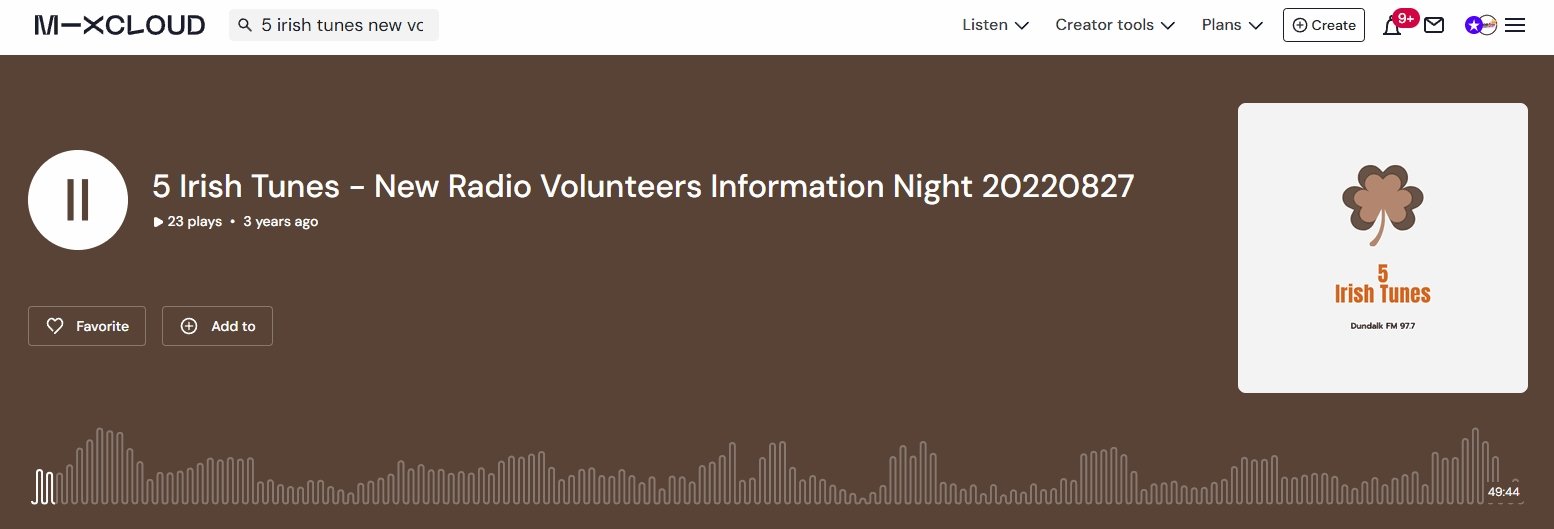
Hear the new volunteers introduce their selections in the original 5 Irish Tunes broadcast on Mixcloud.
The information night was only the beginning
Several members of the group continued into Dundalk FM’s September 2022 presenter course. There, new volunteers learned the language of radio, practised community notices, developed technical skills, prepared programme proposals, and worked towards placing new ideas in the schedule.
The original station update predicted that new community programmes would begin appearing by October. That confidence came from what the team had already heard on the volunteers’ first night.
Five songs can open a much bigger door
The format still appears in the current Dundalk FM programme schedule. Its lasting value is easy to understand. Five musical choices give a beginner enough structure to feel safe and enough freedom to sound like themselves.
If you have ever wondered whether radio could be for you, ask Dundalk FM about volunteer training. Your first programme may begin with something as simple as choosing a song you cannot wait to share.
This article was refreshed and prepared for Dundalk FM by Astory Media, helping local organisations turn valuable archive material into engaging digital content.