
Author: Dundalk FM
Page: 6
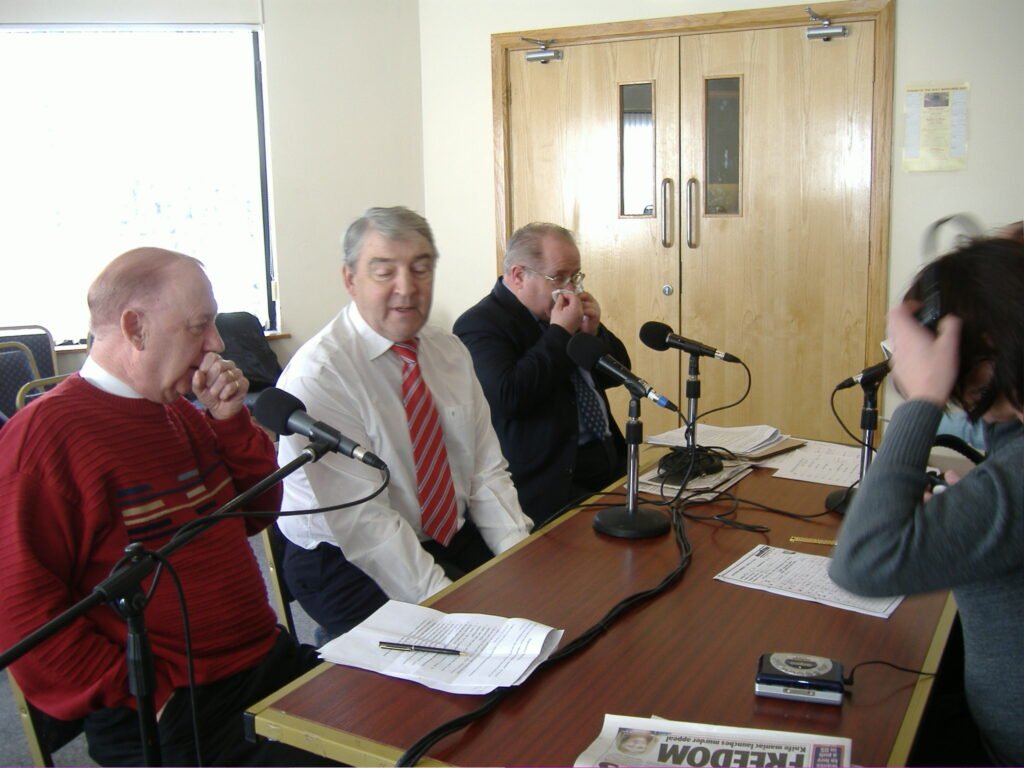
When Jim Ryan joined us in 2003, he presented a classical music programme from half past 12 until one o clock on Sunday for the duration of the temporary Community Radio Station Dundalk Weekend Radio DWR107 FM. His son Stephen came in as his Sound Desk Operator selecting the CD track numbers. Jim would have spent hours listening to each track just to get the right sequence for his weekly playlist. Jim’s knowledge of classical music was immense. He introduced us to baritone, bass, mezzo-soprano, contralto, countertenor, arias, chorus and overtures. Jim often said that he would have liked to do a Jazz programme and that would have been quite something to tune in to. Jim’s daughter, Vanessa shortly afterwards followed her Dad’s footsteps into radio and presented a history programme called Time Detectives. Vanessa interviewed many local and national archaeology professors and experts and also stood in to present Classic Sounds on occasion. When the station received its full-time community radio service contract in September 2004, Jim presented a midday Current Affairs show. He kept the Classic Sounds programme on Sunday, moving it to one hour. During the ensuing years, myself and our Weekend Duty Staff who worked the sound desk for Jim got to chat with the listeners who rang in asking for a request. Sundays had a certain routine – Joe Martin presented Magic Moments from 10 am to 12 pm, followed by Jim Ryan and Classic Sounds from 12 pm to 1 pm, Joe Duffy followed at 1 pm with Showband Street, Tom Gernon at 2 pm with Back to the Sixties and Jimmy Neary (with his wife Marita taking the phone requests) with Shades of Green from 3 pm to 5 pm. In the recent past, Jim’s weekly show was curated and kept on air by Tony Moran. So, we’ll bid adieu, slán to our radio colleague Jim Ryan. Thank you for bringing your wealth of knowledge of Classical Music to the listeners and for your considerable contribution to the success of the Community Radio Service – Dundalk FM. Alan Byrne Manager Jim Ryan presents Classic Sounds every Sunday at 12.00 noon.

Dundalk FM is pleased to offer Work Experience opportunities to Transition Year, PLC, Adult Education and 3rd level Students. If you are a TY or PLC Student, please download and complete this application form and return it to info@dundalkfm.ie. TY-and-PLC-Work-Experience025026-Application-Form Month/2025 TY and PLC Work Experience Dates available October 6th – 10th November 3rd – 7th 2026 January 12th – 16th February 9th – 13th March 2nd – 6th April 13th -17th If you are in Adult Education or on a 3rd level course please email info@dundalkfm.ie with the details of the request for work experience.
Nov 22 2nd Monday at 8 pm Louisa Moss hosts a music show with mainly Irish indie music with a strong slant on diversity.
Nov 22 Orla Crilly presents a new Friday night show at 7 pm featuring new releases.
https://dundalkfm.ie/wp-content/uploads/2021/02/Town-Talk-Features-1-to-111.mp3 Spotlight Link to 5 Irish Tunes Webpage
Organized by UNESCO in partnership with WHO, Remote Radio Week is an online training programme aimed at building the capacity of local radio stations to produce accurate and professional radio content in the event of containment measures or emergencies, including financial difficulties. The programme, which will also be available on demand, will cover the several thematic areas, with particular reference to the pandemic crisis. The programme targets radio operators, professionals and managers worldwide with a particular attention to the needs of local radio stations. Remote Radio Week will propose distinct programmes in English, French, Spanish and Arabic each day, featuring experts, examples, debates and technical tips for the audience. Lots of tips available on remote broadcasting on UNESCO Remote Radio Week https://www.remote-radio-week.org/
Engaging migrants through community radio Twenty New Voices: How Dundalk FM Used Radio to Build Belonging The project began with a simple belief. People who are building a new life in Dundalk should have the opportunity to tell their own stories, in their own voices, on their own community station. Dundalk FM • Community radio training and participation When people move to a new country, they are often talked about long before anybody asks to hear from them.Statistics describe them. Headlines debate them. Policies categorise them. But a microphone can change the direction of the conversation. In 2018, Dundalk FM set out to welcome 20 new migrant voices into its community radio service. The goal was not to create a single programme about migration and then move on. It was to give new contributors the skills, confidence, and weekly space to become part of local broadcasting. 20new voices A place within the station Participants would learn how community radio works, develop practical broadcasting skills, and contribute through a weekly reporter slot. Integration becomes real when people are not merely welcomed into the audience, but trusted with the microphone. Learning how to tell a story on air The training began with the foundations of community radio. Participants explored why a community-owned station exists, how a programme is structured, and what responsibilities come with speaking on air. They learned about running orders, programme links, formats, features, health and safety, and the legal importance of avoiding libel. These were not abstract classroom topics. Each lesson prepared participants to make real radio for real listeners. The project aimed to bring 20 new migrant voices into Dundalk FM through training and regular participation. Then came the microphones, faders, and first recordings Knowing the purpose of community radio was only the beginning. The next step was learning how to make it. Control the soundSet microphone and music levels using the studio sound desk. Record a confident linkIntroduce a subject clearly and guide listeners through a programme. Edit audioShape recorded voices and programme elements into a finished piece. Create a promotionGive listeners a reason to discover an upcoming show or feature. Research local informationFind a news item or community notice and prepare it responsibly. Build a magazine programmeBring several voices and subjects together in a 25 minute format. Every exercise moved the participants closer to the same powerful moment: hearing something they had researched, recorded, and created coming back through the speakers. Media literacy is also a form of confidence The project was designed to develop more than technical ability. Participants could share their experiences with the wider community, explain what they had learned to the groups they represented, and better understand how media stories are selected, framed, and presented. That matters because media literacy changes a person’s relationship with information. A participant no longer hears a radio report only as a listener. They understand the research, choices, editing, and responsibility behind it. The deeper skill was agency. Participants were learning how to move from being represented by the media to becoming active contributors within it. New voices make local radio more local Dundalk has been shaped by people who arrived from many countries, carrying languages, music, memories, skills, businesses, family traditions, and new ways of seeing the town. If those experiences are missing from local radio, the station cannot fully reflect the community outside its door. A weekly reporter slot offered something valuable to everyone. New contributors gained access to the airwaves. Listeners heard experiences they might not encounter in their everyday lives. Community groups gained members with practical communication skills. Dundalk FM became more representative of the place it served. From a training room to a wider culture of participation The project sat within a longer history of Dundalk FM training people from migrant and international communities. Later station records describe Dundalk International trainees, free radio courses for migrants and refugee women, and programmes that explored migration experiences through collaboration. A national report on the social benefits of community radio also documented projects designed to challenge xenophobia by creating direct contact with migrant experiences. Training, teamwork, and participant-led interviews helped replace second-hand assumptions with real voices. This approach still matches the current values described in Dundalk FM’s mission as an inclusive community station. The station welcomes participation from established and newer communities, recruits volunteers from across Dundalk, and offers supportive training without requiring previous broadcasting experience. A photograph can show training. A voice can show belonging. The photographs from the first workshop were taken by Lucie Mingmei Hao, then a fourth-year TV and Film student at Dundalk Institute of Technology. They capture people learning, listening, trying equipment, and working alongside one another. But the true result of a radio project cannot be contained in a photograph. It is heard when somebody introduces a community story with confidence. When a listener recognises their own experience on air. When a participant realises that an accent is not something to hide, but part of the voice they bring to Dundalk. Who has not been heard yet? That question remains essential for every community station. Dundalk continues to change, and its radio service must keep making room for the people, languages, cultures, and stories that now form part of local life. If you or your community group has a story to share, explore the Dundalk FM community hub, contact the station about taking part, or listen live to the voices already on air. This article was researched, refreshed and prepared for Dundalk FM by Astory Media, helping local organisations turn valuable archive material into engaging digital content. Dundalk FM 97.7, a community sounds most like itself when everyone has the chance to be heard
Tá áthas ar Ghlór na nGael an sraith cláracha/podchraoltaí seo a leanas a léirigh Glór na nGael le feasacht a mhéadú i measc daoine san aoisghrúpa 20-35 bliana ar an gcoincheap de pháistí a thógáil trí Ghaeilge a chur ar fáil do na stáisiúin raidió pobail atá faoi scáth CRAOL le craoladh an samhradh seo. Craoladh iad ar dtús báire mar Phodchraoltaí ar-líne in Eanáir & Feabhra 2021. Léiríodh an sraith seo le tacaíocht ó Foras na Gaeilge agus ón Roinn Turasóireachta, Cultúir, Ealaíon, Gaeltachta, Spóirt agus Meán. Tá na cláracha curtha i láthair ag an craoltóir Sinéad Ní Uallacháin. Déanadh eagarthóireacht ar na podchraoltaí don raidió 9 x 28 nóiméad. 7 x 28 nóiméad i nGaeilge agus 2 x 28 nóiméad i mBéarla _________________ Glór na nGael is pleased to provide the following series of programs for broadcast to the community radio stations covered by CRAOL this summer. The series was originally produced to raise awareness among people in the 20-35 age group of the concept of raising children through Irish. They were originally broadcast online as Podcasts in January & February 2021. This series was produced with the support of Foras na Gaeilge and the Department of Tourism, Culture, Arts, Gaeltacht, Sport and Media. The programs are presented by broadcaster Sinéad Ní Uallacháin. The podcasts have been edited into 9 x 28 minute programmes for radio: 7 x 28 minute programs in Irish and 2 x 28 minute programs in English Cláracha 01 – 07 i nGaeilge (Programs in Irish) Cláracha 08 – 09 i mBéarla (Programs in English) 01 Gillian Love “Ghlac mé leis i gcónaí go labhróinn Gaeilge le cibé páiste a bhí agam” Tógadh Gillian Love le Béarla i gContae na Mí. Labhraíonn sí go hoscailte le Sinéad Ní Uallacháin faoin gaol atá aici féin leis an Ghaeilge anois agus í pósta agus páiste aon bhliain d’aois á thógáil aici féin agus a bean céile “It was always my intention to raise my children when I had them” Gillian Love was raised through English in County Meath. She speaks to Sinéad Ní Uallacháin about her relationship with the Irish language now that she is married and raising a one-year-old child with her wife. __________________________________________ 02 Brian Ó Broin “Chuir mo bhean chéile a cosa i dtaca agus dúirt sí, bhuel má bhíonn tusa ag labhairt Gaeilge leis na páistí labhróidh mise Gearmáinis leo” I gcomhluadar Sinéad Ní Uallacháin tá Gaillimheach a bhfuil clann á thógáil aige féin agus a bhean le Gaeilge agus le Gearmáinis i Nua-Gheirsí, Meiriceá. Roinneann Brian Ó Broin a thaithí agus a thuairimí ar thógáil páistí le níos mó ná teanga amháin san agallamh spéisiúil seo. “My wife put her foot down and said, well if you speak Irish with the kids I’ll speak German to them” Sinéad Ní Uallacháin is joined by a Galway man who with his wife is raising a family with Irish and German in New Jersey, in the USA. Brian Ó Broin shares his experiences and views on raising children with more than one language in this interesting interview. __________________________________________ 03 Áinín Uí Chaiside & Cabríní de Barra Is Oifigeach Forbartha le Glór na nGael í Áinín Uí Chaiside a thugann tacaíocht do theaghlaigh tríd Teanga Tí. Déanann sí cur síos do Shinéad Ní Uallacháin ar an obair a dhéanann Glór na nGael agus an tacaíocht a thugann an scéim Teanga Tí do theaghlaigh atá ag tógáil a bpáistí le Gaeilge Agus… Tar éis 13 bliain a chaitheamh i Sasana bhog Cabríní de Barra lena fear céile agus a beirt pháistí óga go dtí na Déise. Tógadh na páistí go dátheangach agus bhí blas ‘Yorkshire’ ar Ghaeilge a hiníon Aoife ar feadh roinnt blianta ach “bhí blas Dhún Garbhán ag Caoilte in imeacht coicíse!” Labhraíonn Cabríní le Sinéad Ní Uallacháin faoi thógáil clainne le Gaeilge agus a cuid oibre le Glór na nGael ag tacú le teaghlaigh atá ag tógáil a bpáistí le Gaeilge. Áinín Uí Chaiside is a Development Officer with Glór na nGael who supports families through Teanga Tí. She describes Glór na nGaels work to Sinéad Ní Uallacháin and the support given by the Teanga Tí scheme to families raising their children through Irish. And… After spending 13 years in England, Cabríní de Barra moved with her husband and two young children to Na Déise, Co. Waterford. The children were brought up bilingually and arriving from England her daughter Aoife had a ‘Yorkshire’ accent for a number of years but “Caoilte had picked up a Dungarvan accent in a fortnight!” Cabríní talks to Sinéad Ní Uallacháin about raising a family through Irish and her work with Glór na nGael supporting families who are raising their children through Irish. __________________________________________ 04 Aodh Mac Gairbheith “Dhéarfainnse ‘Tá fáilte romhat’ dá mbeadh tú ag teacht isteach chun tigh chugam. Ní dhéarfainn é choíche dá ndéarfadh duine ‘Go raibh maith agat’ liom. Dhéarfainn ‘Go ndéana sé a mhaith duit’ “. Tá cónaí ar Aodh Mac Gairbheith, a bhean Lisa agus a mbeirt pháistí i Rann na Feirste i gContae Dhún na nGall. Insíonn Aodh a scéal agus a thaithí faoin teaghlach dátheangach le Sinéad Ní Uallacháin sa chlár seo. “I would say ‘Tá fáilte romhat – You’re welcome’ if you came into my house. I would never say it if someone said ‘Go raibh maith agat – Thank you’ to me. I would answer ‘Go ndéana sé a mhaith duit – May it do you good’”. Aodh Mac Gairbheith, his American wife Lisa and their two children live in Rann na Feirste in County Donegal. Aodh tells his story and experience of their bilingual family with Sinéad Ní Uallacháin in this program. __________________________________________ 05 Mary-Pat O Malley “Níl cruthúnas ar bith ann go bhfuil ceangal idir an dátheangachas/ilteangachas agus fadhbanna urlabhra” Is í an léachtóir, teiripeoir urlabhra agus teanga, agus an t-údar Mary-Pat O Malley atá i gcomhluadar Sinéad Ní Uallacháin agus í ag roinnt saineolas agus comhairle. “There is absolutely no
This series of five programmes introduces the listener to the organisers, trainees and instructors of Water Safety Ireland – Louth. The locations were in the Aura Centre Dundalk, the Co Louth beaches and the Regional, National and European Surf Life Saving Competitions. The series highlights the character building activities and friendships that start on the Irish beaches and continue throughout life. Water Safety is not an expensive sport but does demand that the participants commit a large amount of time. Parents tell us that there is a lot of planning to do to get the children to the beaches and that this has created a reliance on each other to car share and look out for each other’s children. They describe how their children have been brought up through Water Safety Ireland – Louth events and training. We hear about how they bring along the equipment each week to the training – the mannequins and the defibrillator. They also tell us how the sport brings out the teacher in teenagers because they learn to coach and mentor the younger trainees. It teaches them communication skills and how to handle responsibility and it gives them confidence so that they can carry themselves in an interview assured that their knowledge and skills have been certified by Water Safety Ireland. Some of the parents help out at the competitions. They measure out the space for the Flag events and put down the flags. Other jobs include taking the fins from the surf board, helping to transport the equipment for competitions and organising refreshments and snacks for instructors.